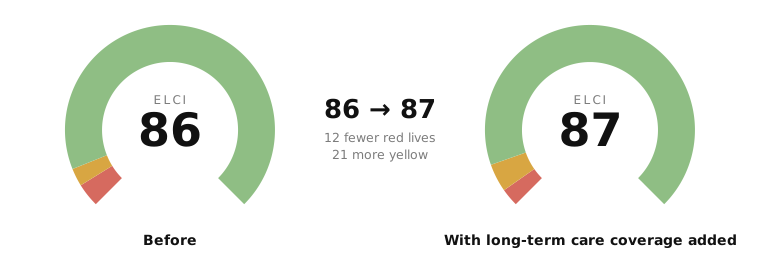
ELCI
Expected Lifetime Comfort Index. One headline number that tells you at a glance how your plan fares across a thousand simulated lives, together with a dashboard that helps you dig into the nuance and understand the risks, tradeoffs, and realities of your plan.
A thousand lives
Every simulated life runs through all three engines at once. MarketPath supplies the markets that life retires into: the bull runs, crashes, and inflation spells, in the mixes history actually serves up. LifePath supplies the human side: how long the life runs, in what health, and what care it comes to need. The spending engine plays your plan through both, month by month: what gets spent, taxed, claimed, and covered, and when the plan calls for tightening the belt.
Each life is graded over the years it actually contains: a life cut short on the years that it had, a forty-year retirement on all forty. A plan that would have run short at 85 isn't a failure in a life that ended at 79. A thousand lives show you the range of futures your plan may actually have to carry, each judged on its own terms.
Every life gets a color
Each life is assigned a score and a color code: red for lives that exhausted the portfolio and couldn't cover essentials, yellow for lives with constraints on your discretionary budget, green for the well-funded lives.
Comfort travels with the life
Comfort isn't a fixed picture of retirement; it's measured against the life actually being lived. The active years are graded on experiences. The quieter years are graded on the comforts of home. When health changes what your days look like, your plan's job changes with it: different costs, different care, a different definition of a good month. ELCI asks one question of every life: did the plan keep up? Not with the retirement you sketched on day one, but with the one that arrived: needs met, standards held, at every age and in every condition. A plan that carries a long life with real care needs as gracefully as a short healthy one has done exactly what you asked.
One number, 0 to 100
The individual life scores are rolled up into a single score from 0 to 100. A 100 is hard to attain (honest retirement plans have aspirations and tradeoffs), but such a plan would be fully funded throughout the vast majority of lives and leave a legacy that meets your stated goals. A score in the 90s means your lives were by and large funded. Lower scores mean discretionary cutbacks that ran more than a brief stint, and once red lives become common, ELCI drops off dramatically. No amount of upside in the good lives makes up for essentials failing in the bad ones.
You draw the line
Green is the target, red is what you're avoiding, and a higher score is better. But what counts as red, and how much flexibility you want in your discretionary spending, are up to you. One retiree may not want to even consider a retirement without weekends on their boat, and builds those costs into the essentials. Another is willing to cut back to the bare minimum if times get tough. You decide, and your ELCI measures how close your plan comes to the goals you set.
Put it to work
Change one thing and run it again. Retire two years later. Add long-term care coverage. Dial the portfolio up or down. The score moves, or it doesn't, and either way you've learned something real about your plan. And because MarketPath starts from today's market, your score isn't frozen in time: the same plan, re-scored after markets move, shows you how much of your comfort was riding on those prices.