LifePath
The health engine. LifePath simulates each life's health as it unfolds: how long you live, how well you function and think, and the care you may need along the way.
A life expectancy is one number. You need the distribution.
Life expectancy is an average, not a forecast. More than half of retirements run past it, one in seven by a decade or more. A plan tested at exactly that age misses the short lives, where money was saved for years that never came, and the long ones, where it runs thin. LifePath models health and mortality risk month by month as each simulated life unfolds, so your plan meets a thousand plausible lives instead of one chosen endpoint.
Health is a trajectory
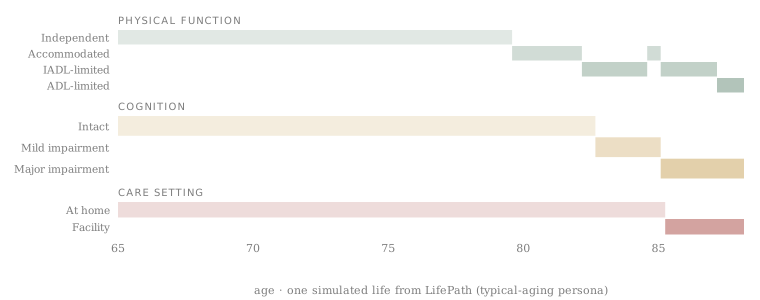
The years between fully healthy and gone are what actually shape retirement spending: trouble with the stairs, then with driving, and, in some lives, with the checkbook. LifePath simulates physical function and cognition as separate paths that decline, plateau, and sometimes partially recover, month by month.
The trajectories are calibrated against the large national studies that have followed American aging for decades, the Health and Retirement Study (HRS) and the National Health and Aging Trends Study (NHATS), so the timing and duration of decline in the simulations match what actually happens to people.
Care has a price and a timeline
When function or memory declines far enough, care begins: help at home, assisted living, or a nursing facility. LifePath ties care need directly to each simulated life's health, so care costs arrive when that life's decline actually happens, at the intensity it requires. Long-term care insurance, if your plan carries it, offsets those costs on its own terms.
Couples age together
In a couple, both partners' health paths are simulated jointly. One partner's care years change the household's spending while the other still lives at home; a death changes the household's income through survivor Social Security and its expenses through everything else. The survivor's remaining years are part of the same simulated life, and the plan is scored on all of it.
Why this belongs in a financial plan
Care needs are the biggest unknown in most retirement plans. The difference between a life with three years of nursing care at 84 and a life with none can be as large as the difference between a good and a bad market. Simulating health explicitly is how ELCI shows you that exposure without fear or guesswork.