Spending Engine
The planner in the loop. As every simulated life unfolds, it decides what gets spent each month: protecting what you called essential, adapting the rest, and keeping the books on taxes, benefits, and care.
You set the floor
Every plan starts with your split: the essentials that must be funded in every future, and the discretionary life you want on top. That line is yours to draw, and it is the line ELCI's score defends. A plan is judged by whether the essentials hold in every simulated life and how much comfortable living gets funded above them.
A planner who adjusts
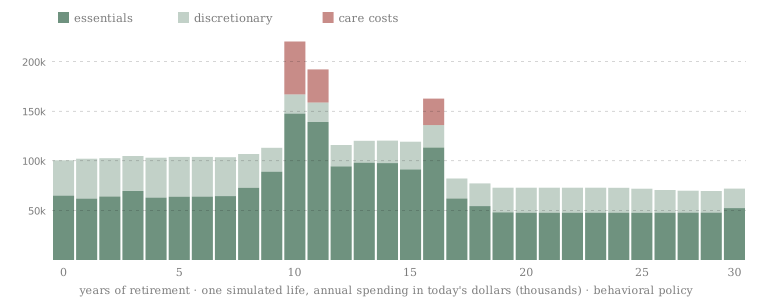
The default policy works like an annual checkup: once a year it looks at how funded the plan is and sets the year's discretionary spending accordingly, easing back through lean stretches and spending confidently when the plan is ahead. It behaves the way a prudent planner would, because a retirement plan isn't a set of handcuffs.
Prefer different rules? The policy is adjustable, and the classic withdrawal strategies are in there too, for comparison.
It files your taxes. All of them.
Every simulated year the engine does the accounting a real retirement requires: federal brackets, capital gains against your actual cost basis, an additional income-tax rate you set, and required minimum distributions, with withdrawals drawn across brokerage, traditional, and Roth accounts. Tax drag isn't a footnote in the results; it's paid, month by month, inside every simulated life.
Benefits, timed like a planner would time them
Social Security claiming is chosen inside each life: normally delayed to 70 for the maximum benefit, claimed as early as 62 if spending runs tight or health turns, with the benefit adjusted for the age it starts. Before Medicare, the engine prices real health coverage, including marketplace premiums and the subsidies your simulated income actually qualifies for; after 65 it pays Medicare's premiums and out-of-pocket costs.
Care costs flow through
When LifePath puts a life into home care, assisted living, or a nursing facility, the planner pays for it: facility costs at the intensity that life requires, offset by long-term care insurance if the plan carries it. The expensive years arrive in the simulation the way they arrive in life, unevenly and sometimes all at once, and the plan is scored on how it carries them.